
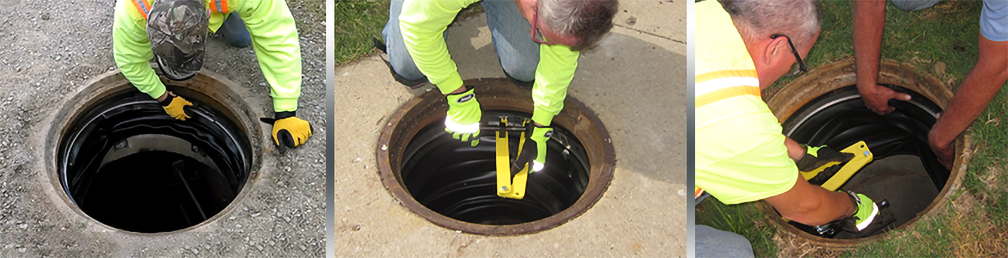
When municipalities think about inflow and infiltration (I&I), attention often focuses on pipe joints, laterals, and deteriorating manholes. Yet one of the most common—and overlooked—sources of leakage is the manhole chimney.
Located between the cone section and the casting, the chimney experiences constant stress from traffic loading, freeze-thaw cycles, road salts, hydrogen sulfide, aging concrete, and years of adjustment work. Over time, these forces can create cracks and pathways for groundwater to enter the collection system.
In fact, chimney leaks can contribute up to 70% of the total inflow and infiltration entering a sewer system.
Why Rehabilitation Matters
Completely rebuilding a manhole is rarely the most practical solution.
Fortunately, trenchless rehabilitation methods allow municipalities to restore leaking chimneys without excavation. These no-dig solutions reduce costs, minimize traffic disruption, and extend the service life of existing infrastructure.
But not every rehabilitation method performs the same over the long term.
Mechanical vs. Applied Solutions
Today’s municipalities generally have two approaches for sealing leaking chimneys: applied seal systems mechanical chimney seals.
Applied products rely on coatings or chemical bonding to create a barrier between the frame and chimney.
Mechanical seals use compression and stainless-steel bands to create a physical seal that remains effective despite movement, active leaks, or changing weather conditions.
Each approach has its place, but engineers should consider installation conditions, lifecycle expectations, maintenance requirements, and total cost of ownership—not simply initial material cost.
Thinking Beyond Initial Cost
The true cost of a rehabilitation product isn’t determined on installation day. Surface preparation requirements, specialized equipment, weather delays, installation time, expected service life, and future maintenance all influence the overall value of a repair.
According to the American Society of Civil Engineers’ Manhole Inspection and Rehabilitation (Manual of Practice No. 92), mechanical chimney seals have a significantly longer anticipated service life than applied solutions, making them an attractive option for municipalities focused on lifecycle costs.
A Proven Mechanical Solution
Since the first pilot installations in 1981, Cretex Specialty Products’ LSS Chimney Seal has helped municipalities stop leaks without excavation.
As The Original frame-to-manhole mechanical chimney seal, LSS installs with simple hand tools, performs in wet conditions, and can even be installed on active leaks. Unlike many applied systems, installation is not dependent on ideal weather or specialized equipment.
For new construction, rehabilitation projects, or manholes with structurally sound chimneys experiencing leakage, LSS provides a durable, trenchless solution designed for decades of performance.
Take the Next Step Toward Long-Term I&I Prevention
Choosing the right rehabilitation method starts with understanding your options. Cretex Specialty Products offers complimentary Lunch & Learn sessions where engineers, municipalities, and contractors can learn about chimney rehabilitation strategies, mechanical sealing technology, and best practices for reducing inflow and infiltration.
Whether you’re evaluating rehabilitation options for a single project or developing long-term specifications, our team is ready to help. Schedule a Lunch & Learn today.